

For pneumatic actuated valves, quality is determined by much more than whether a valve can open and close. A reliable valve assembly needs consistent machining, accurate component matching, dependable sealing, stable actuator movement, and effective inspection before it reaches the customer.
FDKZF has strengthened its quality control approach for pneumatic actuated valves by placing greater emphasis on inspection throughout the manufacturing and assembly process. Instead of relying only on a final inspection, the company focuses on controlling critical points from incoming components through assembly, functional testing, and final shipment.
This approach is particularly important for industrial customers using air actuated valves in water treatment, food processing, chemical equipment, pharmaceutical machinery, textile production, beverage systems, and other automated fluid-control applications.
For distributors and equipment manufacturers, consistent quality also means fewer installation problems, more predictable valve performance, and easier maintenance after delivery. FDKZF's quality-control process is therefore designed around one practical objective: delivering pneumatic actuated valves that perform consistently under their specified operating conditions.

A pneumatic actuated valve combines several mechanical and pneumatic components into one operating assembly. The valve body, sealing elements, stem, actuator, mounting connection, air ports, and optional control accessories must work together correctly.
A problem in any one of these areas can affect the complete unit.
For example, a valve may have a suitable actuator but still experience leakage because of an unsuitable seal or machining issue. An accurately manufactured valve may also perform poorly if the actuator is incorrectly assembled or the operating mechanism has excessive resistance.
This is why quality control for an air actuated valve should not be limited to checking its appearance after assembly.
| Quality Point | Potential Problem | Possible Result |
|---|---|---|
| Valve body | Dimensional or machining variation | Installation or sealing problems |
| Stem and transmission parts | Excessive friction or poor fit | Unstable valve movement |
| Sealing components | Incorrect material or damage | Internal or external leakage |
| Pneumatic actuator | Assembly or movement problems | Incomplete or inconsistent operation |
| Valve-actuator connection | Incorrect alignment | Mechanical resistance or premature wear |
| Air connection | Poor sealing or incorrect assembly | Air leakage |
The table above illustrates why a pneumatic valve actuator should be treated as part of a complete control assembly rather than as an isolated component.
One of the important changes in a structured quality-control process is moving inspection closer to the beginning of production.
Before components enter assembly, relevant materials and purchased parts can be checked according to their application and specifications. This helps prevent unsuitable components from entering later manufacturing stages.
For pneumatic actuated valves, incoming inspection may cover valve bodies, stems, seals, fasteners, actuator housings, pistons, springs, mounting components, and pneumatic accessories.
The inspection focus depends on the component. Dimensional consistency is important for mechanical parts, while sealing components require attention to material specification, size, surface condition, and compatibility with the intended service environment.
For industrial valve manufacturing, the purpose is not simply to reject defective parts. A well-organized incoming inspection process also helps identify recurring supplier or batch variations before they affect finished products.
Dimensional accuracy is especially important when a pneumatic actuator is installed onto a valve.
The actuator and valve need to match mechanically. Mounting dimensions, shaft or stem interfaces, rotational movement, and fastening points must be compatible with the intended configuration.
International valve-actuator interface standards can be used as technical references when applicable. ISO 5211, for example, specifies dimensions and requirements related to attachment of part-turn actuators to industrial valves.
For FDKZF, dimensional inspection is therefore an important part of maintaining repeatable valve assembly rather than treating each assembled unit as an individual product.
This becomes particularly valuable for customers purchasing pneumatic actuated valves repeatedly. A distributor or equipment manufacturer expects the same model ordered in different batches to maintain consistent installation characteristics.
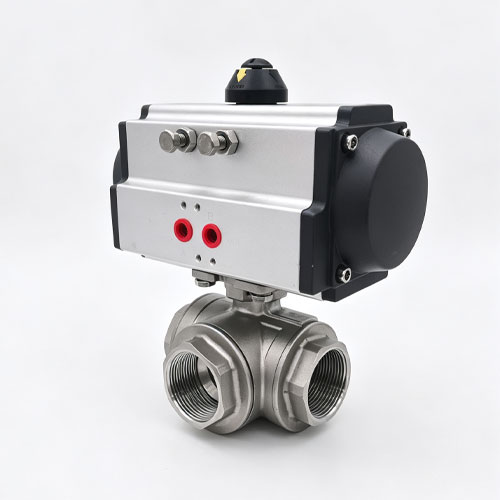
Sealing performance has a direct relationship with the reliability of an actuated valve.
Depending on the valve design and application, sealing components may include valve seats, O-rings, stem seals, piston seals, and other elastomeric or polymer components.
During inspection, attention should be given to:
Correct seal specification
Dimensional consistency
Surface condition
Visible damage or deformation
Correct installation position
Compatibility with the intended operating medium
A seal that looks acceptable visually may still perform poorly if it is incorrectly sized or installed. For this reason, assembly quality is just as important as the quality of the sealing material itself.
For customers operating air actuated valves with water, steam, neutral gases, chemicals, cleaning fluids, or other process media, the seal material should always be selected according to actual temperature, pressure, medium, and operating conditions.
After components pass inspection, assembly becomes another important quality-control stage.
A pneumatic actuated valve is not simply a valve connected to an air actuator. The mechanical relationship between the two components directly affects operating performance.
During assembly, technicians need to ensure that the valve and actuator are correctly aligned and securely connected. The transmission mechanism should operate smoothly without unnecessary resistance.
Assembly checks may include:
Valve and actuator alignment
Fastener installation
Stem or shaft engagement
Actuator mounting
Seal installation
Air-port connection
Manual movement checks where applicable
Open and close position verification
These checks help reduce the possibility that an assembly error will only become visible after the product has reached the customer's installation site.
A pneumatic actuator needs to convert compressed air into controlled mechanical movement. Its performance therefore needs to be evaluated as part of the completed valve assembly.
Functional testing can verify whether the assembled pneumatic valve actuator responds correctly to the specified air input and whether the valve reaches the expected operating positions.
Depending on the configuration, testing may include repeated opening and closing cycles and confirmation of the actuator's movement.
For a double-acting pneumatic actuator, both operating directions are relevant. For a spring-return pneumatic actuator, the return action also needs to be considered because the spring mechanism determines the valve's behavior when the air supply changes
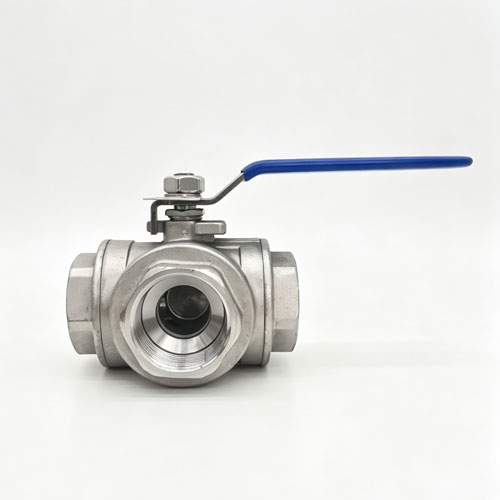
or is removed.
The purpose of functional testing is not to simulate every possible field condition. It is to identify assembly or component problems before shipment and establish that the finished product operates according to its intended configuration.
Leakage is one of the most important quality concerns for industrial valves.
A complete quality-control process may therefore include different forms of leakage inspection depending on the valve design, customer requirements, and intended application.
For example, inspection may focus on the valve's internal sealing performance, external sealing points, actuator air connections, and other potential leakage paths.
| Inspection Area | Purpose | Typical Concern |
|---|---|---|
| Valve sealing area | Check shut-off performance | Internal leakage |
| Stem sealing area | Verify external sealing | Process-medium leakage |
| Actuator connection | Check mechanical interface | Loose or misaligned assembly |
| Air connection | Check pneumatic circuit sealing | Compressed-air leakage |
| Valve body joints | Check assembly condition | External leakage |
Testing criteria should always be based on the specific valve design, applicable standards, customer specifications, and intended service conditions rather than applying one universal test value to every pneumatic valve.
Correct valve positioning is another detail that can have a significant effect on field installation.
For automated valve systems, the actuator must correspond correctly with the valve's open and closed positions. If the mechanical relationship is incorrect, the valve may not provide the expected flow-control behavior even though the actuator itself is functioning.
FDKZF's inspection approach therefore includes checking the operating position of the completed assembly before shipment.
This is particularly useful for customers integrating pneumatic actuated valves into automated equipment. When the valve arrives correctly assembled and configured, installation teams can spend less time correcting basic mechanical problems.
Some pneumatic actuated valve assemblies include additional control components such as solenoid valves, position indicators, limit switches, air filters, regulators, or other accessories.
These components can affect the overall operation of the valve assembly.
For example, an actuator may be mechanically capable of moving the valve, but incorrect accessory configuration can prevent the system from receiving the appropriate air signal.
When accessories are supplied as part of an integrated solution, compatibility and connection should therefore be considered together with the valve and actuator.
This is one reason FDKZF approaches quality control at the assembly level rather than checking every component as an unrelated item.
For industrial buyers, quality is not simply about receiving one good valve.
When a customer orders ten, fifty, or several hundred units, the expectation is that the products will remain consistent across the batch.
This is especially important for equipment manufacturers and distributors who may install the same pneumatic actuated valve model in multiple machines or projects.
Consistent manufacturing helps simplify:
Equipment design
Valve replacement
Installation procedures
Spare-parts management
Customer service
Routine maintenance
For this reason, quality control should focus not only on finding defective products but also on reducing process variation.
Traceability provides another layer of control for industrial valve manufacturing.
When products or components can be associated with a production batch, inspection record, or relevant manufacturing information, it becomes easier to investigate quality questions after delivery.
For manufacturers and distributors, traceability can support faster communication when a customer asks about a particular valve model or production batch.
It also creates useful feedback for internal quality improvement. If the same type of issue appears repeatedly, production teams can investigate whether the cause is related to material, machining, assembly, testing, or another process stage.
One of the key principles behind FDKZF's approach is that final inspection should not be the only quality checkpoint.
By the time a finished pneumatic actuated valve reaches final inspection, a manufacturing problem may already have consumed material, labor, and production time.
Earlier inspection points can identify problems before they move further through the manufacturing process.
| Production Stage | Quality Focus |
|---|---|
| Incoming components | Specification, dimensions and visible condition |
| Component preparation | Machining and assembly readiness |
| Valve assembly | Correct component installation and alignment |
| Actuator installation | Mechanical compatibility and positioning |
| Functional testing | Opening, closing and actuator movement |
| Leak inspection | Sealing and pneumatic connections |
| Final inspection | Product configuration and overall condition |
| Shipment | Identification, packaging and order verification |
This process-oriented method creates several opportunities to detect problems before the product reaches the customer.
Not every pneumatic actuated valve is used under the same conditions.
A valve installed in a water-treatment system may have very different requirements from one used in food processing or chemical equipment.
For this reason, product quality cannot be separated completely from application requirements.
Water-treatment systems often require reliable automated opening and closing of pipelines. Valve material, sealing performance, corrosion resistance, and actuator operation should be evaluated according to the water quality and system conditions.
Food and beverage equipment places additional emphasis on material selection, cleanliness, sealing, and hygienic design where applicable. Components must be selected according to the process and cleaning requirements.
Pharmaceutical systems generally require tighter control over materials, cleanliness, process conditions, and documentation. Valve selection should therefore be based on the specific equipment and process requirements.
Chemical applications may expose valves to aggressive or mildly corrosive media. Material and seal compatibility should be evaluated before selecting an air actuated valve for such systems.
Automated valves are also widely used in textile machinery, production equipment, cleaning systems, and general industrial automation. Stable actuator operation and repeatable valve movement are important for these applications.
The quality of compressed air should not be overlooked when evaluating pneumatic equipment.
Compressed air can contain particles, water, and oil contaminants. The level of cleanliness required depends on the pneumatic system and application.
ISO 8573-1 provides a classification framework for contaminants and purity classes of compressed air. In practical applications, appropriate filtration, separation, regulation, and air preparation can help protect pneumatic components.
For a pneumatic actuator, clean and properly conditioned compressed air can contribute to more stable operation and reduce contamination-related problems.
However, the appropriate air-treatment configuration should be determined according to the actuator, control components, operating environment, and system requirements.
Quality claims are easy to make, but industrial buyers should evaluate a supplier using practical questions.
How are incoming components inspected?
Are critical dimensions controlled during production?
How is the valve and actuator assembled?
Are completed valve assemblies function tested?
How is leakage checked?
Are open and closed positions verified?
Can the supplier provide the required configuration consistently?
Can different valve materials and seal options be supplied for different applications?
Is product identification available for batch or order tracking?
Can the manufacturer support OEM or distributor requirements?
These questions provide a more useful way to evaluate a pneumatic valve manufacturer than simply comparing unit prices.
Zhejiang Fengdu Technology Co., Ltd. is located in Longwan, Wenzhou, Zhejiang, an area with a strong industrial valve manufacturing base.
FDKZF focuses on Pneumatic angle seat valves, diaphragm valves, pneumatic ball valves, pneumatic directional valves, pneumatic sanitary ball valves, sampling valves, sanitary butterfly valves, and related pneumatic valve products.
Its quality-control approach is built around matching components, controlling assembly, checking finished valve performance, and supplying products according to the customer's application requirements.
Rather than treating quality as a final packaging step, FDKZF places attention on the manufacturing process itself. This is particularly important when pneumatic valves are supplied to equipment manufacturers, distributors, system integrators, and industrial users who need stable product consistency across repeated orders.
For international distributors, quality consistency is closely connected with business reputation.
A distributor may not be present when the valve is manufactured, but the distributor is often the first party contacted when an end user experiences a problem.
Consistent inspection and product configuration can therefore make a difference beyond the factory floor.
FDKZF can support customers looking for pneumatic actuated valves, pneumatic ball valves, air operated valves, pneumatic valve actuators, and related industrial flow-control products.
For OEM projects, the important factors may include valve configuration, actuator type, connection standard, seal material, operating pressure, temperature range, medium compatibility, control accessories, packaging, and quantity.
A clear specification at the beginning of an order helps both sides reduce misunderstandings and establish an appropriate inspection process.
Quality control cannot eliminate every possible problem in a complex industrial system. Valve performance also depends on correct sizing, installation, operating conditions, compressed-air quality, maintenance, and application compatibility.
What a manufacturer can do is establish a controlled production process that reduces avoidable variation.
For pneumatic actuated valves, this means paying attention to the complete product rather than focusing on one individual component.
The actuator must operate correctly. The valve must seal properly. The mechanical connection must be secure. The configuration must match the customer's requirements. The completed assembly should pass the applicable inspection procedures before shipment.
These basic principles create a stronger foundation for long-term industrial use.
A pneumatic actuated valve is a valve operated by a pneumatic actuator using compressed air. The actuator converts pneumatic energy into mechanical movement to open, close, or position the valve.
Because the valve and actuator operate as a combined assembly. Problems with sealing, alignment, machining, or actuator installation can affect the performance of the complete unit.
Depending on the product and customer requirements, inspection may include dimensions, assembly condition, actuator movement, valve opening and closing, sealing performance, air connections, position verification, appearance, and order configuration.
Yes. Particles, water, and oil contamination in compressed air can affect pneumatic components. Appropriate air preparation should be selected according to the system and application.
FDKZF can discuss OEM and distributor requirements based on valve type, actuator configuration, connection requirements, materials, seals, operating conditions, accessories, and order quantity.
Reliable pneumatic actuated valves are the result of controlled manufacturing rather than a single final inspection.
For FDKZF, strengthening quality control means paying attention to the details that influence finished valve performance: incoming components, dimensions, sealing parts, mechanical assembly, actuator installation, functional movement, leakage inspection, position verification, and product traceability.
This process-oriented approach is particularly valuable for industrial customers who require repeatable products for automated equipment and fluid-control systems.
As demand for pneumatic automation continues across water treatment, food and beverage, pharmaceutical equipment, chemical processing, textile machinery, and general industrial applications, consistent valve quality becomes increasingly important.
FDKZF will continue to focus on manufacturing pneumatic valves and actuator-based flow-control products with an emphasis on process control, product consistency, and practical application requirements.
For customers looking for a pneumatic actuated valve manufacturer, pneumatic ball valve supplier, air actuated valve, or pneumatic valve actuator solution, FDKZF can provide product information and configuration support based on the specific application.
Sales Hotline: +86 15057336363
Email: 1625959864@qq.com
Address:No. 609, Binhai 12th Road, Wenzhou
Technology Development Zone, Wenzhou City


Diese Website verwendet Cookies, um sicherzustellen, dass Sie das beste Erlebnis auf unserer Website erhalten.

 English
 Español
 Pусский
 Français
 日本語
日本語 한국어
한국어 العربية
 Italiano
 Nederlands



 WhatsApp
 Telefon
Kommentar
(0)